This presentation has tried to look Simulacra and Simulation with the use of three different sources. Here in this presentation, I have compared one book, one movie, and one Real-life character; The White Tiger, Namo, and The Slumdog millionaire. To see the comparison among Jamal, Modi, and Balram watch till the end.
Comparison among The White Tiger, Namo and The Slumdog millionaire
This presentation has tried to look Simulacra and Simulation with the use of three different sources. Here in this presentation, I have compared one book, one movie, and one Real-life character; The White Tiger, Namo, and The Slumdog millionaire. To see the comparison among Jamal, Modi, and Balram watch till the end.

Games as a Mass Media Platform.
This presentation is based on these hypotheses,
# Games can be considered and used as a Mass media,
#Future of Mass media lies in Games,
# Games can educate better than any other resources;
through the hypothesis, I have tried to see the outcome in the real world. Interested watch till the end. If you have any questions comment belove.
DAILY SCHEDULE COMMITTEE:Annual Report - [2018/19]
Hello Friends,
As I am committee Leader at the department of English I have to give Yearly Report with a presentation about all the activities by the Daily Schedule committee as well as students active participation Report; so this presentation includes some of the glims of activities through photographs of events and at the end I have given Chart of students participation from Part 1 and part 2.
BARBARIANS ARE IMAGINARY
This presentation is based on Hypothesis #BARBARIANS ARE IMAGINARY with the help of two novels; Waiting for Barbarians and Heart of Darkness. The comparative studies come up with such a disastrous conclusion, which might break down your idea of Barbarians. so what is it? For that you have to see this presentation till the end.
Ds Committee "Memorabilia"
DAILY SCHEDULE COMMITTEE REPORT
“You'll never change your life until you change something you do daily. The secret of your success is found in your daily routine.”
― John C. Maxwell
Department is an institution and like all other institutions in the world, it also needs to assemble and meet every day to carry out all of its functions; therefore here, in the department, a day starts with a bunch of activities, known as a “Daily schedule”. To make the day auspicious we start our daily schedule with the chanting of University song and then prayer. Then the next column is “thought of the day”, which not only make students aware of the great thoughts and ideas of the world but also teaches how to use it in life. One must know what is happening around oneself. It is very important for oneself to take necessary measures at the right time so here students came up with the idea of Newspaper reading. The habit of reading newspaper not only enhance our knowledge but also improves accuracy and fluency, it proves questioning which helps in generating ideas and inspires to think. It is a kind of exercise, which gives an insight into the world around.
Albert Einstein a famous thinker once said that a person who learns a word a day is smarter and wise than rest so therefore we have a column known as “Vocabulary drill”. It actually drills out the frozen minds of learners and helps them to learn new vocabulary with the examples from day to day life. The fifth column of DS is Poetry recitation in which student presents English poetry. Opinion building is the column through which all the leaders of various committees inform and notify students about upcoming events. It is also the column from where the songs of rules and regulations sung over time. Furthermore, Personal presentation is the column, which gives a platform to present personal views of the participant. Regional literature allows all the type of literature from all the languages. Here students cultivate a habit of reading books as well as watching movies and then they come up with reviews of it. The last columns are Humour of the day and the National song. After DS sir gives the review about the performance of the students, which encourages the confidence level of students.
#Benefits of participating in Ds
Participating in Ds helps to improve Academic as well as Non-academic knowledge in students. It helps to overcome stage fear and boost up confidence level. It stretches on LSRW skills and encourages community involvements. Therefore, learning happens everywhere, not just in the classroom.
Daily schedule committee not only limited to department activity but also organize some charity events like A Blood Donation camp. It also arranges rational talks with an author like Bhupendrasinh Raol.
#Major works by committee
· Gurupurnima special Ds
· Christmas special Ds
· Debate on LGBT Act 377
· Debate on the judgment of Adultery Act 497
· Women’s day special Ds
Talk with An Author Bhupendrasinh Raol
The Daily schedule committee is very much thankful to all the members and to those students who helped a lot without being a part of the committee. Because to participate actively and to help in arranging the things is not everyone’s liking. Special thanks to Dr. Dilip Barad sir for encouraging and back support. Ds committee is also thankful to Heenaba Zala ma’am and Vaidehi Hariyani ma’am for guidance and support.
Mass Media
Hello Readers,
This blog is part of my classroom learning process; in which the teacher taught us about 'Mass Media and its importance' and gave a task to write something on our favorite Mass Media platform for communication; for further information click here...
# what is Mass Media?
:max_bytes(150000):strip_icc():format(webp)/chatbubbles-internet-communication-technology-triangular-node-pattern-background-1007274860-5c0023124cedfd0026731a9f.jpg)
There are some drawbacks too but as we used to say that each coin has two sides, in the same manner, this digital media has also two sides. Some people may satirically joke on the invention of the internet and the mobile phone because it was invented to save the time of human beings but as we can see around the world these platforms waste the huge number of time and thus it can be considered as its drawback. According to me, it depends on the person, people should be smart with technology because day by day technology is becoming smart and people are becoming dumb. Another thing which I found interesting is, the huge number of information is available on this kind of platforms but it is up to a person that how he/she can find authentic information out of it.
Thank You.
This blog is part of my classroom learning process; in which the teacher taught us about 'Mass Media and its importance' and gave a task to write something on our favorite Mass Media platform for communication; for further information click here...
# what is Mass Media?
- The mass media are a large number of the array of media which mainly designed to reach and commute with a large number of audience. Redio, Tv, magazine, newspapers etc are types of Mass media platform. generally, it is a diversified collection of Media techology. The term mass media was coined in 1920s during the advent of redio, newspapers and magazines, at that time the platforms of mass media were few but after the invention of internet mass media progressed revolutionary. nowadays it has thousands of platforms like Whatsapp, facebook, youtube, wikipedia etc.
#TASK
Q- Which is your favorite Mass media platform for communication? Why do you like it? What are its drawbacks?
ANS-
As I mentioned above that there are thousands of platforms are available for communication all you need is reasonable internet data pack with 3G or 4G speed. There are few types of mass media like Broadcast media, outdoor media, print media, and digital media. In which Broadcast media refers to films, Tv, radio, recorded music etc. second is Outdoor Media which involves AR advertising; billboards; blimps; flying billboards which are placed in and outside of buses, Mall, buildings etc. The third one is print media it transmits information via books, comics, newspaper, pamphlets etc. the last one is my favorite because it is digital media and it includes such a wonderful platform like Whatsapp, Facebook, youtube.
All these mass media platforms are very much familiar with today's generation, we all have used these platforms in the process of self-development.
I mostly like these 3 platforms...
1] Whatsapp
2] Facebook
3] youtube
visuals effects more to human minds and I am kinetic so love to use these platforms to enhance my knowledge. This platform provides information in such a way that it become easy to decode and understand thus I prefer these platforms.
There are some drawbacks too but as we used to say that each coin has two sides, in the same manner, this digital media has also two sides. Some people may satirically joke on the invention of the internet and the mobile phone because it was invented to save the time of human beings but as we can see around the world these platforms waste the huge number of time and thus it can be considered as its drawback. According to me, it depends on the person, people should be smart with technology because day by day technology is becoming smart and people are becoming dumb. Another thing which I found interesting is, the huge number of information is available on this kind of platforms but it is up to a person that how he/she can find authentic information out of it.
Thank You.
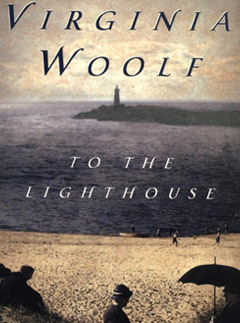
" To The Lighthouse" Blog task
This blog is a part of my thinking activity given by a teacher on 'To the Lighthouse', by Virginia Woolf. Click here to see Teacher's blog.

Virginia Woolf is known for the term stream of consciousness, in which mind is struggling with time. As she was struggling with the time. Steam of consciousness means time travels in the past and in the future but, but we are in the present.
1] How can you explain that 'what' Virginia Woolf wanted to say (for example, the complexity of human relationship, the everyday battles that people are at in their relationship with near and dear ones, the struggle of a female artist against the values of middle/ upper-class society etc) can only be said in the way she has said? (Key: The 'How' of the narrative technique is to be discussed along with features of the Stream of Consciousness technique which helps Woolf to put in an effective manner what she experienced in abstractions.)
- Yes, very appropriately Woolf used complexity in human relationships like Mr. Ramsay and Mrs. Ramsay. This kind of relationship we can find in everyone's relation in real life and also she said about the struggle in an artist's life like in the novel Lily struggle a lot and also we can find similar in our time also that many artist like filmmaker, writers, cartoonist, painters also beaten by public and power or patriarchy. If we read biographically then we can come to know that Virginia Woolf used this technique to prove that women also can write and paint better than men. So, she used a stream of consciousness technique 3rd person narrative to move from one to another character's mind. With the help of this technique narrator shows us the inner flow of thoughts walking in the mind of the character, for instance, the(James' thought). So, we can come to know about the inner and outer relationship of characters with each other.
2] Do you agree: "The novel is both the tribute and critique of Mrs. Ramsay"? (Key: Take some clues from the painting of Mrs. Ramsay drawn by Lily Briscoe and the article by Andre Viola and Glenn Pedersen. Can we read Mrs. R in context of the idea of Ideal Indian Woman - Karyeshu dasi, Karaneshu manthri; Bhojeshu Mata, Shayaneshu Rambha; Kshamayeshu dharithri, Roopeshu Lakshmi; Satkarma yukta, Kuladharma pathni. )
- After reading the article of Andre Viola, it seems like that the novel The novel is both the tribute and critique of Mrs. Ramsay. But it depends on readers how they want to read taking the support of reader response theory. No doubt the novel is considered as the tribute of Mrs.Ramsay because after her death also she is able to live in minds of other characters. But... I just think that the novel is more critique rather than the tribute of Mrs.Ramsay. As we all know that the stereotypical Indian culture, Mrs.Ramsay is presented as same as Indian woman presented in their literature. Does Virginia Woolf describe that only through this? Mrs.Ramsay does all things for family members, she lives for others, she does so many sacrifices for the sake of others and so many things which are already decided by patriarchal society. Mrs.Ramsay is alive in mind of others because of her services and compassion to each. She has something to give all the characters. Mrs.Ramsay is also known as ' Angle of the House'. And Lilly Briscoe is totally opposite from the Mrs.Ramsay. Lilly tries to break the wrong idea that " the “women can’t paint can’t write”. She does that and proves women’s identity as intellectuals as men. I think Virginia Woolf is more interested in Lilly Briscoe's character rather than Mrs. Ramsay. Both are remarkable characters in the novel because Mrs. Ramsay is alive because of her Womanhood only and Lilly Briscoe for her art. So, According to me, It is the way of describing irony not a tribute of Mrs.Ramsay.
3] Considering symbolically, does the Lighthouse stand for Mrs. Ramsay or the narrator (Virginia Woolf herself who is categorically represented by Lily)? (Key: Take help from the presentation on Symbolism to connect Mrs. Caroline Ramsay with Lighthouse. Secondly, the narrator/author cannot fully disappear from the novel and thus the stoicism of Lily to paint and thus prove that she can paint is symbolically presented in stoicism of Lighthouse. Read 'lighthouse' symbol from presentation slide with this insight to connect lighthouse with the narrator. Give your concluding remarks in the comment below in this blog )
- Mrs. Ramsay can be seen as the lighthouse as the symbol of the lighthouse is considered as the strong pillar which bears the pounce from the sea, which is stood in between of the sea and not only suffering from the sea but also shows the way to the wandered people. In the same manner, Mrs. Ramsay is also trying to please all the people all the time and still remains objective and having a very kind nature. Lily can be also called the lighthouse because throughout the novel she is being irritated by the Tensely(Patriarchy) by such statements like "Women can't write or paint" as the lighthouse also has to suffer many storms into the sea. but ultimately at the last, she proves herself by completing her painting that whatever Tensely (society) says about her (Modern Women) she is free from all the stereotypes.
4] In the article by Joseph Blotner, two myths are patterned together. Name the myths? How they are zeroed down to the symbols of 'Window' and 'Lighthouse'? How does the male phallic symbol represent feminine Mrs. Ramsay? (Key: The strokes of light-beams. . . )
- In the novel two types of myths.Oedipus myth and Pagan Myth. The Oedipus Myth presents in the characters like, James and Mrs.Ramsay. her main goal is to care for her youngest son James .Mrs. Ramsay tells her son that’ if the weather is good tomorrow, they can go to the lighthouse. So, here we can see how she cares for her child with love another side Mr. Ramsay tells him, today that’s not possible...So, as mother Mrs.Ramsay is know how to do care of children. We can say that Mrs. Ramsay is about as close as Virginia Woolf. Mrs. Ramsay is the lovely star at the center of the Ramsay family, and at the heart of the novel. Mrs.Ramsay magical power as the great mother is quite clear in the first section. Mrs.Ramsay is more emotional, whose magical force attracts people. The second. We find pagan myth in Mrs. Ramsay’s character. In pagan myth Rhea, Demeter and Persephone this are reflected in Mrs. Ramsay’s character.
5] What do you understand by the German term 'Künstlerroman'? How can you justify that 'To The Lighthouse' is 'Künstlerroman' novel? (Key: http://www.britannica.com/EBchecked/topic/325047/Kunstlerroman)
- Kunstlerroman means apprenticeship novel that deals with the youth and development of an individual who becomes a threshold of becoming a painter musician or poet. Throughout the novel, if we read Lily’s character she develops as a painter. In the third part she completes the painting of Mrs. Ramsay, and finally, she has had her own vision. Same as Augustus Carmichael he is also a poet who is unknown chapter one but his poetry meets unexpected success afterward. So both the characters develop one as a painter and another as a poet.
- By these lines, we can say that Lily is in dilemma because of patriarchy and the women who consciously or unconsciously accomplice with patriarchy. We can see in the novel that Lily is attracted towards the Bank but she is not showing her feelings in sense of marriage because she doesn't want to be like Mrs. Ramsay. She is not happy with Mrs. Ramsay because she is the one who supports patriarchy and also wants her daughter to do the same. These lines show that by following the order one gets death Prue died because she follows her mother's order to get married. The reason of Prue's death in childbirth, which again is the idea of an ideal or perfect woman given by Mrs. Ramsay while bringing up her daughters. In process of becoming perfect, she died. This is shown Lily's dilemma, that she is seeing all these things in front of her eyes but can not change the mind of women around her.
7] You have compared the 'beginning' and the 'ending' of the novel and the film adaptation of the novel directed by Colin Gregg (you can see it again in the embedded video below this). Do you think that the novel is more poignant than the movie? If yes, do you ascribe the fact that the power of words is much greater than that of the screen/visuals?
- The opening scene of Novel comes in a film almost after an hour. It means film maker has to changes in adoption film and this is require too. Especially when novels like ‘To the light house’ because novel have not as many outdoor scene in compare of film. Moreover, novel have not as much dialogue as well as interesting story plot but to make it interesting one must have to made some changes. Overall tone of novel is not bright but in grey shade and darkness so it hard to capture all this things in camera. So I think that novel is more poignant than the movie.
8] How do you interpret the last line of the novel (It was done; it was finished.
Yes, she thought, laying down her brush in extreme fatigue, I have had my vision.) with reference to the ending of the film (After the final stroke on the canvass with finishing touch, Lily walks inside the house. As she goes ante-chamber, the light and dark shade makes his face play hide-and-seek. She climbs stairs, puts her brush aside, walks through the dark and light to enter her room. Gently closes the door - speaks: "Closed doors, open windows" - lies on the bed and with some sort of satisfaction utters: "Dearest Briscoe, you are a fool".)
- At last we knows that Lily Briscoe completed her painting but there is something missing and that thing she realised after completed her drawing because she wants to draw Mrs. Ramsay's painting but at the end she can not because Mrs. Ramsay is a great personality and not only about Mrs. Ramsay but to paint someone's personality is very difficult and at the end that thing realised by Lily Briscoe.
9] What does the catalog named as 'Army and Navy' signify? What does the cutting of 'Refrigerator' signify?
- Army and navy catalog signifies a time of war. On one hand, 'Refrigerator' is a tool for preservation. Against that is also a symbol of the change in technology, changing and presumably improving human culture. James is guided in his choice by Mrs. Ramsay and it should, therefore, be associated with her role as preserver and shaper of culture. The traditional woman who is not allowing the change, and preserver of old tradition.
10] Why did Virginia give such prominence to the tale of the “Fisherman’s Wife”? In particular, why did she weave such a misogynist tale into the fabric of a book which so eloquently challenges received patriarchal notions about the roles and capabilities of women?
- By giving place to the story like "Fisherman and His Wife" we can see that Virginia Woolf is trying to criticize here the way a woman is portrayed in the story. She also wants to criticize the women who thinks these types of stereotyping real and also believe in that, that they themselves are like this only. This notion of believing her self less this is criticized here. Virginia Woolf with the use of fairy tale subverting the misogyny of the fairy tale. Fairytale in novel challenges the myth about female desire and dangers of unopposed female will and desire. The real danger seems to be male needs and desire.
11] How is India represented in 'To The Lighthouse'? (Read this blog for passing reference)
- Many characteristics of this novel are match with Indianness. Because in this novel we find the " Ruled India" means patriarchy. Mr. Ramsay is more powerful rather than Mrs. Ramsay. Mrs. Ramsay is like purely Indian Mother,who pampered husband ego and carrying all the family members. Augustus Carmichael visits to India,because that time India as land of desire to visit and exotic land.
Film Screening: Lagaan

15th August 2018
On the special occasion of Independence Day, we have watched the movie Lagaan(2001) directed by Ashutosh Gowariker.This film covers various topics like patriotism, postcolonialism, religion, subaltern and many more.
'Lagaan': Once upon a time in India is an Indian epic sports drama film directed by Ashutosh Gowarikar. The film is set in the Victorian period of India's colonial British Raj. The story revolves around a small village whose inhabitants, burdened by taxes, find themselves in an extraordinary situation as an arrogant officer challenges them to a game of Cricket as a wager to avoid the taxes. The narrative spins around this situation as the alien game and playing for a result that change their village's destiny.
So, this is an archetypal story similar to other movies. There are many archetypal symbols like the temple, Rain, Myth, love story, etc. But here we can try to understand or will interpret through the various literary theories, approaches and different perspective like:
Post Colonialism
Nationalism
Patriarchy
Cricket as metaphor
Subaltern
Rural India
Teamwork and Leadership
Teamwork and Leadership: teamwork and leadership is the main aspects of this movie, we can say that this is a major factor in this film. Leadership is not an easy task, leadership is both a research area and a practical skill encompasses the ability of an individual or organization to lead or guide other individuals and teams. Similarly, Bhuvan also tries to buildup team for the betterment of the village so he tries everything to make unity in the team for the battlement.
- Teamwork and Leadership
teamwork and leadership were the main aspects of this movie, we can say that this is a major factor in this film.Be a leader is not an easy task you have to go through many problems. Nobody accepts your point of view to look at the things. The leader has always different view to look at the things. He has optimist way to see the things. So same things happen with Bhuvan ( Amir Khan ). Bhuvan looks things differently. He thinks that victory in the cricket match leads his village people towards a bright future. But nobody understands his point. He faced many problems and humiliation during making the Cricket team but he never takes his steps back. Leadership is not an easy task, leadership is both a research area and a practical skill encompasses the ability of an individual or organization to lead or guide other individuals and teams. Similarly, Bhuvan also tries to build up the team for the betterment of the village so he tries everything to make unity in the team for the battlement.
- Nationalism
I don't think so that the movie is about nationalism or patriotism. It can be the different thinking of director to represent nationalism through regionalism. But, according to me, it is only about regionalism, Bhuvan's concerns only for his region or village do not stand for an entire country's sake. The movie is about the taxes(Laggan) imposed by Britisher on the farmers and farmers unable to pay so Villagers raise their voice for the sake of their farm and economical condition not for the betterment or freedom from British Raj. I think you see the movie as a patriotic but what is the outcome of the is? beyond the cricket game, there is a love triangle between the main characters Bhuvan, Elizabeth and Gauri that's it.
If we look at film only from the upper layer, then we can find the patriotic idea, that is all the villagers are fighting for their nation, for the identity of the nation, they don't want to obey the Britishers for any reason. They don't want to pay taxes to them. They want freedom, from any type of strict or cruel rule. They can do anything for their pride of the nation. Bhuvan accepts the challenge given by Russell just to cancel the double taxation which was landed over the villagers by them.
- Indianness


Religious activities
Dance form
Food
Clothes
Game
Profession
Gender role
Caste system
- Patriarchy

In the film shows the patriarchal power. In the whole film shows that only males can play the cricket. Females do not get any importance in the game. when Gauri wants to play the cricket her father told her to check that water is boiling or not. so she has no any freedom to play cricket. so Indian women have to do household works only. In the other side, Queen Elizabeth ruled over England. It shows that women power. In film also Elizabeth teaching all Males how to play the cricket. so with the help of Elizabeth, they can understand the Game. So in this way in some ways, Women empowerment shows in the film.
- Cricket as metaphor

This movie is very unique one than other patriotic movies. Generally, Patriotic movies use the atom bomb, Machinegun, sword, spears to fight with a national enemy, but here director uses Cricket as a metaphor because cricket is a Britisher's game and India also very powerful in this game in the 21st century. So, here very good used of this game to make critical thinking and also to make it entertaining. According to me that maybe director thought maybe was that we can not defeat Britisher with an atom or else things but we can do it with cricket because now we are master in cricket. So, It can be possible that the intention of the movie maker to use cricket as a metaphor.
- Subaltern

Here we can apply subaltern theory and we also can find hierarchy here. In this movie, India is under control of British rule so the first subaltern is India, and at first, the place comes king. Here King is also under the control of British rule and he can’t do anything against them. Then under the king comes villagers. They are helpless in front of the king, they have to obey the decision of the king. Then comes the women of the village, as they are controlled by a male. They live life like do what is said to do. At last comes untouchables. They meant to live away from all other villagers. In this movie, we have one character named Kachara, who is untouchable. He is so afraid of other people he constantly under fear of not touching anyone and not to make any mistake.
- Post Colonialism
As we all know that the game of cricket is belongs to the Britishers. So metaphorically cricket is imposed on us. In the movie also we find Elizabeth as an instructor of cricket. In the movie, Lakha represents dishonesty whereas Elizabeth represents honesty. So again White remains on the positive side.so The only thing represents post-colonialism in this movie is game of cricket. We accept to play cricket because we want freedom from tax but now in free India why this game is more famous than any other game. It clearly shows that how still British people ruling our mind. This is the reason why cricket is more played and watched than our national game.

"Modernist" metaphors in ten short poems: Thinking activity
" Identification of Modern metaphors, images, and symbols from the poem " Blog Task
Hello readers,
This blog is one of the activities of our academics. And this time it is based on Modernist Literature. Here I have tried to interpret ten Modern poems according to my understanding.
- Before proceeding forward here I put a brief description of what is Modernism??
->Modernism is a philosophical movement that, along with cultural trends and changes, arose from wide-scale and far-reaching transformations in Western society during the late 19th and early 20th centuries. Among the factors that shaped modernism was the development of modern industrial societies and the rapid growth of cities, followed then by reactions of horror to World War I. Modernism also rejected the certainty of Enlightenment thinking, and many modernists rejected religious belief.
1: The Embankment by T.E. Hulme
Once, in finesse of fiddles found I ecstasy,
In a flash of gold heels on the hard pavement.
Now see I
That warmth’s the very stuff of poesy.
Oh, God, make small
The old star-eaten blanket of the sky,
That I may fold it round me and in comfort lie.
- This poem is about a fallen man, who falls down and lost his luxurious pleasure. He was sleeping on the street, that's why he is asking God to make small the blanket of sky, He becomes that much poor that he didn't find a blanket to cover his body.
- Modern Metaphors:-
- i) Imagism- There are a common speech pattern and clarity of expression, through the use of precise visual image like:-
- "The Old star-eaten blanket of the sky"
- ii) Stream of consciousness
- In this poem, there is a flow of thoughts in the mind of the characters, who is thinking about past and present, contrasting situations.
2: 'Darkness' by Joseph Campbell
I stop to watch a star shine
in the bog hole -
A star no longer, but a silver
ribbon of light.
I look at it and pass on.
- When we read the title Darkness, we feel something negative or the feeling of downfall. Stars is a symbol of brightness and success, but the silver ribbon of light which suggests broken stars, means success or brightness maybe not stay for a long time. And it will pass suddenly. So, the title Darkness symbolizes many things. Here we find modernist metaphors like star shine in big hole and silver ribbon etc.
3: ' Image' by Edward storer
Forsaken lovers,
Burning to a chaste white moon
Upon strange Pyres of loneliness and
drought.
- The title itself present the image of modern people and their lifestyle and also present the people of civilization. Here is the word 'forsaken lovers', burning to chaste, strange etc. are the modernist metaphor used by the poet. white moon used as a symbol.
4: 'In a Station of the Metro' by Ezra Pound
The apparition of these faces in the Crowd;
Petals on a wet, black bough
- Metro station is the modernist metaphor. In this poem, the poet also shows the relationship between people and machines. it also shows the way of living life of modern people. petals, black bough etc. the words are used as a symbol.
5: 'The Pool' by Hilda Doolittle
Are you alive?
I touch you
You quiver trembling like a sea-fish
I cover you with my net
What are you- banded one?
- Water is not free moving but stored at one particular place, and the water became spoil so same way the life of is not free and that's why poet ask a question that ' Are you alive?'. people live with a lot of fears. " Sea fish " means people, it's a modern metaphor, and fish is covered with the net same way people also under the dark impact of war and Victorian time so they controlled not free. They trapped under social, political and religious rules and regulation. On the other side, we can say that poet talked about the women condition also, and that's why she ask " Are you alive"?
6: 'Insouciance' by Richard Aldington
In and out of the dreary trenches
Trudging cheerily under the stars
I make for myself little poems
Delicate as a flock of doves
They fly away like white-winged
Doves.
- This poem writing in the trenches, the horror of world war 1. The trauma of modern trench warfare affected him deeply. Addington ' s pessimism and negativity about life in trenches and how poverty kept him live and happy.
- Personification: White whinged doves means to fly away
7: 'Morning at the window' by T.S. Eliot
They are rattling breakfast plates in basement kitchens,
And along the trampled edges of the street
I am aware of the damp souls of housemaid
Sprouting despondently at area gates.
The brown waves of fog toss up to me
Twisted faces from the bottom of the street,
And tear from a passer-by with muddy skirts
An aimless smile that hovers in the air
And vanishes along the level of the roofs.
- The present poem about the modern view of England. The main idea of the poem is poverty, it presents a picture of poor people. who have to face several hardships from morning to the late night. There are vivid images that make the poem imagist one for e.g- "Rattling breakfast plates", "Damp souls", "brown waves", "Twisted faces", "Muddy Skirts", "Aimless smile".
8: 'The Red Wheelbarrow' by William Carlos Williams
so much depends
upon
a red wheel
barrow
glazed with rain
water
beside the white
chicken.
- Poem is quite confusing as we see it in a normal way it give the picture of a rural scene where the Rainwater, chicken, and cart are found but its different from it that it talks about dependence and independence that we depend on many things here red wheel barrow suggested it carrying loads of different things, white Chicken suggests the pure and peaceful atmosphere.
9: 'Anecdote of the Jar' by Wallace Stevens
I placed a jar in Tennessee,
And round it was, upon a hill.
It made the slovenly wilderness
Surround that hill.
The wilderness rose up to it,
And sprawled around, no longer wild.
The jar was round upon the ground
And tall and of a port in air.
It took dominion everywhere.
The jar was gray and bare.
It did not give of bird or bush,
Like nothing else in Tennessee.
- This poem is about Jar, which was in the state "Tennessee" in the United States of America. 'jar' means that war and, Anecdote means a small story.
10: 'I' (a'- E.E.Cummings)
l(a
le
af
fa
ll
s)
one
l
iness
- The title of the poem “A leaf falls on loneliness” shows itself the state of being alone and solitude. There is a word “fall” which represents the state of dullness. It can be a fall of civilization, individual’s hope or fall of anything else. If a leaf falls from a tree then the fallen leaf become lonely. In Modernist Literature we can see fall of spirituality and also fall of hope. Loneliness represents the separation from the entire world. So here we can say that this poem represents the state of separation from the entire world and also represents the state of self-centeredness.
Thinking Activity : Waiting for Godot by Samuel Beckett
This blog is part of my academic activity. To see task click here.


1] What connection do you see in the setting (“A country road. A tree.Evening.”) of the play and these paintings?
- The play 'Waiting for Godot' was inspired by Caspar David's painting. The setting of the play and painting is similar. We can find 'Tree' in both, two-person waiting for someone, How nature remains indifferent to them is also same, as day and night came but the person remains at their place as it is without moving. Nature never waits for anyone.
2] The tree is the only important ‘thing’ in the setting. What is the importance of tree in both acts? Why does Beckett grow a few leaves in Act II on the barren tree - The tree has four or five leaves-?
- Yes, The tree is the only important thing in the setting. Tree suggest the presence of nature in the ruined setting. In act l Hopelessness presented through it because tree without leaf is like life without breath. But, in act II there are few leaves grows on the barren tree it shows the hope of rebirth. We can not exactly clarify reason that why Becket grows a few leaves on the barren tree, but Maybe he wants to show the hope. ‘Constant Waiting and yet nothing happens’ this condition of characters can lead them to disheartenment but they are spiritual or inner grow is shown through leaves on the barren tree.
3] In both Acts, evening falls into night and moon rises. How would you like to interpret this ‘coming of night and moon’ when actually they are waiting for Godot?
- Evening falls into night and moon rises signifies that the universe is indifferent to us. Whatever happens in human life despair, anxiety, absurdity; nature’s cycle goes on.
4] The director feels the setting with some debris. Can you read any meaning in the contours of debris in the setting of the play?
- We found setting with scattered fragments, something wrecked or destroyed. After two world wars, people's life became miserable. They find nothingness in the world. It inspires many literary writers to portray such images in artistic expression. Buckett was one of them. The setting reflects the influence of World war 2.
5] The play begins with the dialogue “Nothing to be done”. How does the theme of ‘nothingness’ recurs in the play?
- " Nothing to be done" reflects the Existentialism. This theory shows that life is meaningless, whatever you do it has no ultimate meaning. This play starts with this idea of nothingness. Vladimir and Estragon waiting for Godot without knowing that he will come or not, is he exist or not, who is he?. Their incoherent babblings, changing of hats, unclear theme these all show the Nothingness of the play.
6] Do you agree: “The play (Waiting for Godot), we agreed, was a positive play, not negative, not pessimistic. As I saw it, with my blood and skin and eyes, the philosophy is: 'No matter what— atom bombs, hydrogen bombs, anything—life goes on. You can kill yourself, but you can't kill life." (E.G. Marshal who played Vladimir in original Broadway production 1950s)?
- The play is completely optimistic. The dialogues between Vladimir and Estragon, Lucky and Pozzo, messenger the boy reflect the deep philosophy of life. As Pozzo exclaims " One day is not enough for, one day like any other day he went dumb, one day I went blind, one day we will go deaf, one day we were born, one day we"ll die, the same day, the same second........ " Hindu philosophy says that Nothing can be meaningless. you will gain the fruits of your deeds. And if life is meaningless yet we are going on living. So many people are connected with us but if we kill ourselves then also life will go on as it is for other people. We are almost on the verge of war with other country but yet we are living. Every time we face one or another fear, but after all, we live happily.
7] How are the props like hat and boots used in the play? What is the symbolical significance of these props?
- Beckett has presented all the symbols very well. In the symbol of a hat, we can connect intellectuality. And boots as a dumbness of person. Or we can say carefree spirit with a valid reason as Estragon represents in the play.
8] Do you think that the obedience of Lucky is extremely irritating and nauseatic? Even when the master Pozzo is blind, he obediently hands the whip in his hand. Do you think that such a capacity of slavishness is unbelievable?
- Yes, as I saw the film I think the obedience of Lucky is extremely irritating and nauseatic. When his master becomes blind he has the chance to run away but he didn't do that. We also like Lucky, we all have a chance to free from slavery but we are acting like Lucky. It raises the question of existence. We are tied up with some kind of rope from which we don't want to free.
9] Who according to you is Godot? God? An object of desire? Death? Goal? Success? Or . . .
- In the play, we can say that God is Godot. But according to me the deep desire to be something, to achieve more and more in life. In between so many obstacles will keep coming but we don't have to stop. That's the thing which makes this play positively.
10] “The subject of the play is not Godot but ‘Waiting’” (Esslin, A Search for the Self). Do you agree? How can you justify your answer?
- In Martin Esslin’s essay ‘A Search for the self’ he said that the subject of the play is not Godot but waiting. I do agree with his statement because throughout our life we are waiting for something. We know that the future is unpredictable. So what? Can we give living life? Can we stop desiring something? Can we leave hope? No, we can’t. Our life itself is unpredictable but we go on living to meet with its end, i.e. death. So we can say that internally we are waiting for the liberation of our soul. And externally we are waiting for the death. But the common thing in the both is “waiting” and we can’t free ourselves from it.
11] Do you think that plays like this can better be ‘read’ than ‘viewed’ as it requires a lot of thinking on the part of readers, while viewing, the torrent of dialogues does not give ample time and space to ‘think’? Or is it that the audio-visuals help in better understanding of the play?
- Yes, I think that audio-visual gives us a better understanding of the play. It is also true that it doesn’t give us ample time to think. We have to move fast with changing scene on the screen. But if we try to look at the reading of the text it to has got some limitations for which in some parts we can’t imagine the actual scene or action or pause which is written in the text. But in a screening of this play, we came across a few things as such that why they take a pause or what does the meaning of silence in both the acts signify.
12] Which of the following sequence you liked the most:
o Vladimir – Estragon killing time in questions and conversations while waiting
o Pozzo – Lucky episode in both acts
o A conversation of Vladimir with the boy
- I like the conversational scene between Vladimir and Estragon. They pass many humorous dialogues while waiting to kill their time. As they make the audience burst out in laughter with their silly activities or silly questions over each other.
13] Did you feel the effect of existential crisis or meaninglessness of human existence in the irrational and indifference Universe during the screening of the movie? Where and when exactly that feeling was felt, if ever it was?
- Yes, when Lucky and Pozzo enters it gives the different effect of the existence of Lucky. We can even tolerate the slavishness of Lucky. Pozzo treats Lucky as a slave, it raises the question on existential crises. How Lucky make himself slave for the piece of bones.
14] Vladimir and Estragon talks about ‘hanging’ themselves and commit suicide, but they do not do so. How do you read this idea of suicide in Existentialism?
- Vladimir and Estragon think to hang themselves. If we read it as an existential reader we can say that this idea of suicide is an existential idea. The idea of suicide rejects God. In Christianity suicide is an unforgivable sin. But they agree to commit suicide. They know about Christ and the Bible, though they decide to commit suicide. Though they did not do it, but not because of fear of God, but because they forgot to bring a rope. This idea of rejecting God and behaving on in owns way is an existential idea. So the idea of suicide can be read as existentialism.
15] Can we do any political reading of the play if we see European nations represented by the 'names' of the characters (Vladimir - Russia; Estragon - France; Pozzo - Italy and Lucky - England)? What interpretation can be inferred from the play written just after World War II? Which country stands for 'Godot'?16] So far as Pozzo and Lucky [master and slave] are concerned, we have to remember that Beckett was a disciple of Joyce and that Joyce hated England. Beckett meant Pozzo to be England, and Lucky to be Ireland." (Bert Lahr who played Estragon in Broadway production). Does this reading make any sense? Why? How? What?
- European nations represented by the names of the characters. Vladimir represents Russia and Estragon represents France. There is a history of power politics between France and Russia. Many Russian are in favor of France and many against and vice versa. But still, they are together just like Estragon and Vladimir. Pozzo represents Italy and Lucky represents England, as in political reading Italy tries to impose their ideas and rule over England. Germany stands for Godot. As Hitler was ruling in Germany, and the way he excommunicated the Jews from his country is very much significant and relevant to the play. Both the tramps one or another way threw by their nations. The way they wait for Godot is similar to the way Jews waits for Hitler to accept them.
17] The more the things change, the more it remains similar. There seems to have no change in Act I and Act II of the play. Even the conversation between Vladimir and the Boy sounds almost similar. But there is one major change. In Act I, in reply to Boy's question, Vladimir says:
"BOY: What am I to tell Mr. Godot, Sir?
VLADIMIR: Tell him . . . (he hesitates) . . . tell him you saw us. (Pause.) You did see us, didn't you?
How does this conversation go in Act II? Is there any change in seeming similar situation and conversation? If so, what is it? What does it signify?
- In the ending of both the acts conversation between Vladimir and the boy who is a messenger of Godot happens. It seems similar but there is a slight difference which can be read deeply. In first act even if Estragon was sleeping Vladimir says to a boy that day visite you saw both of us. While in the ending of second act Vladimir says to a boy that tells Godot you saw me. This from "Us" to "Me" clearly shows selfishness. When a time of salvation comes maybe people become selfish. Vladimir has known the biblical story of two thieves. He maybe thought that if only one has to be saved then it should be him. So this slight change in dialogues has made big difference in meaning.
Subscribe to:
Comments (Atom)
MY POSTS
Assignment -5 TECHNOLOGICAL ADVANCEMENT AND HUMAN LIFE.
"TECHNOLOGY" - this word is derived from the Greek word "technology",--techno--> an art, skill or craft and --loggi...

-
 "TECHNOLOGY" - this word is derived from the Greek word "technology",--techno--> an art, skill or craft and --loggi...
 -
TO EVALUATE MY ASSIGNMENT CLICK HERE. Ø Prepared by : KAVITABA P. GOHIL Ø Roll No : 19 Ø Paper – 6 ...
-
TO EVALUATE MY ASSIGNMENT CLICK HERE. Difference between Poem and Poetry: Samuel Taylor Coleridge. Ø Prepared by : KAV...